Getting there
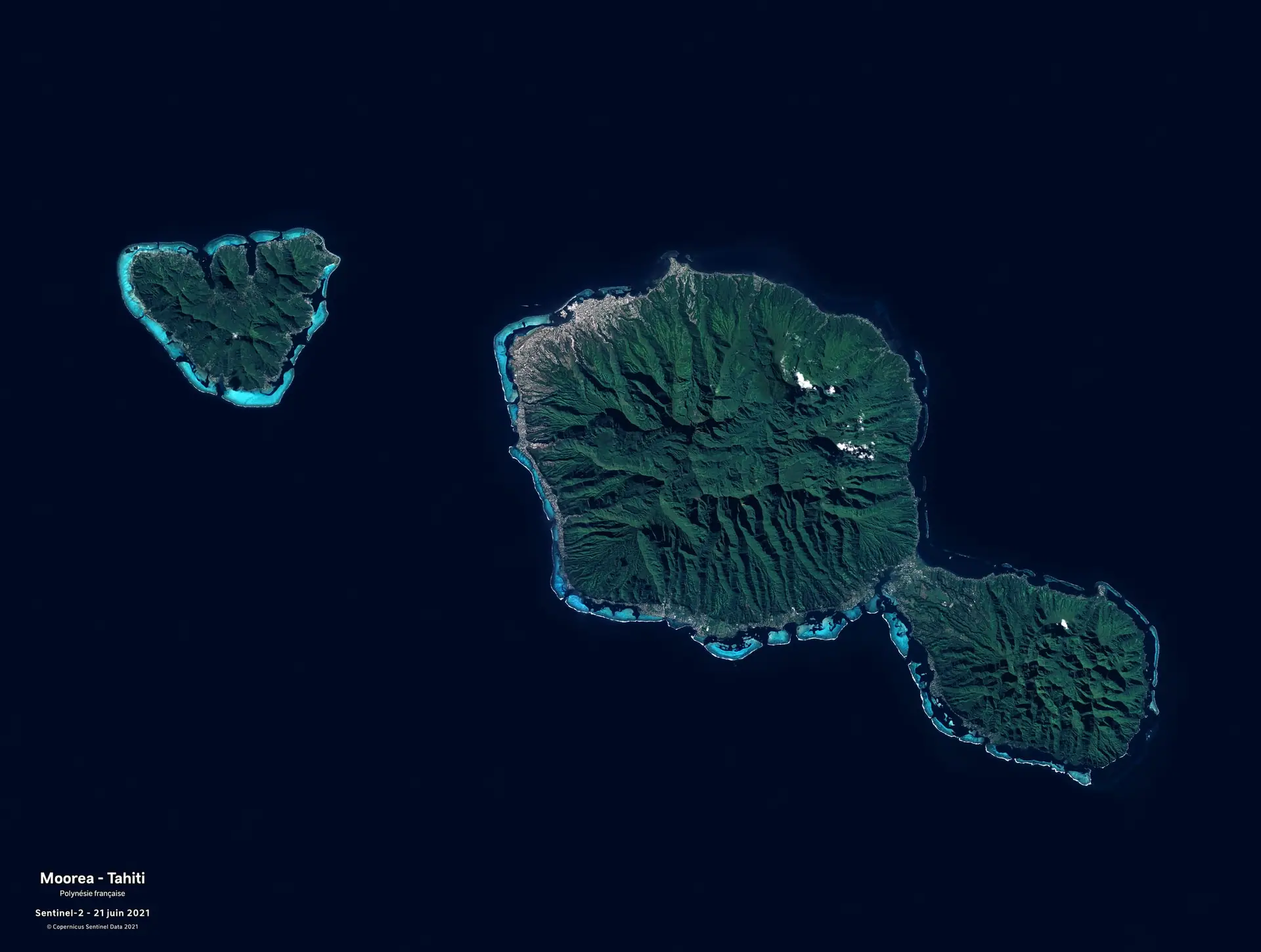
From Tahiti most people come by boat: the shuttles leave the Papeete ferry terminal for the quay at Vaiare. The DPAM lists four companies on the route, Aremiti (vessels Aremiti 5 and 6), Terevau, Tauati Ferry and Vaeara’i; Terevau and Aremiti run a regular daily service for passengers, freight and vehicles. Tahiti Tourisme counts 30 to 45 minutes for the crossing; Vaeara’i states 50 minutes quay to quay and four to five crossings a day, and the DPAM’s observatory recorded five to six daily round trips for the Aremiti 5 in 2024. Aremiti tickets are valid for 360 days on both of its vessels; vehicles are carried, registration document to hand. By air, Air Tahiti, Air Moana and Air Archipels land at Temae, a quarter of an hour from Tahiti-Faa’a.
On arrival, taxis wait on the Vaiare quay, at the airport and near the main hotels; car-hire companies have desks at the airport and the ferry terminal, scooters and bikes can be hired too, and some hotels run a shuttle, free or paid. Tahiti Tourisme advises arranging the transfer when booking the accommodation; the island bus follows the coast road and is not very reliable.
Climate and seasons
Moorea shares the climate of the Society Islands as Météo-France describes it: humid tropical, a rainy season from November to April with December and January as the wettest months, a cool dry season from June to September, April–May and October–November in transition, March the warmest month. The annual mean measured at Faa’a, across the water, is 26 °C; the coasts exposed to the trade wind and the heights are markedly wetter. Cyclone risk runs from November to April.
Moorea is one of the islands where humpback whale watching is regulated: the whales arrive from July to the end of October, licensed outings take place only from 20 July to 20 November, from 7.30 am to 5.30 pm, with a single licensed boat per island and per company group, and never in the lagoon, the bays or the passes. Tahiti Tourisme names Moorea among the islands where operators certified by the Direction de l’environnement work and, for diving, places the whales’ presence from August to November, with an authorised guide only.
What makes the island
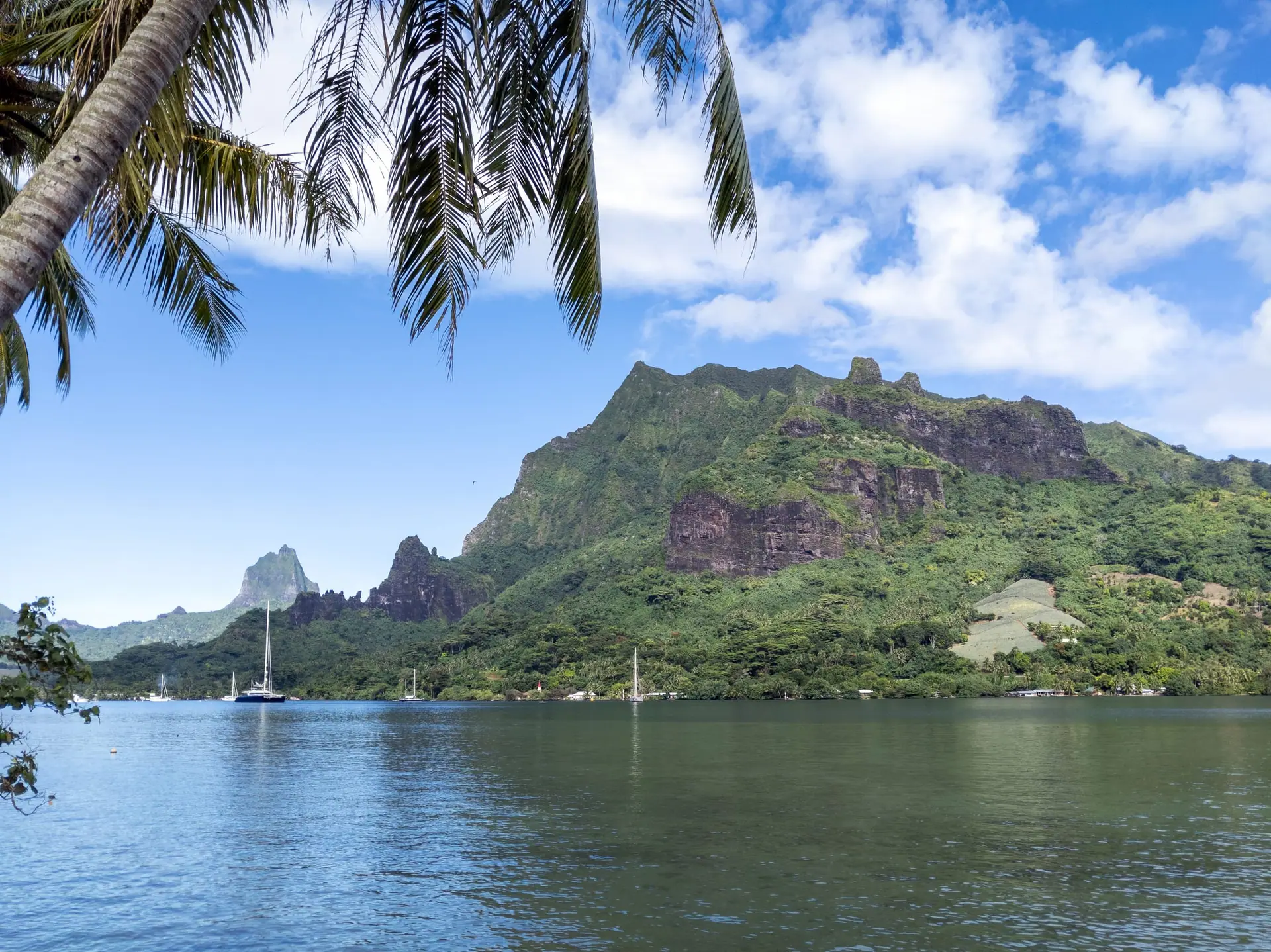
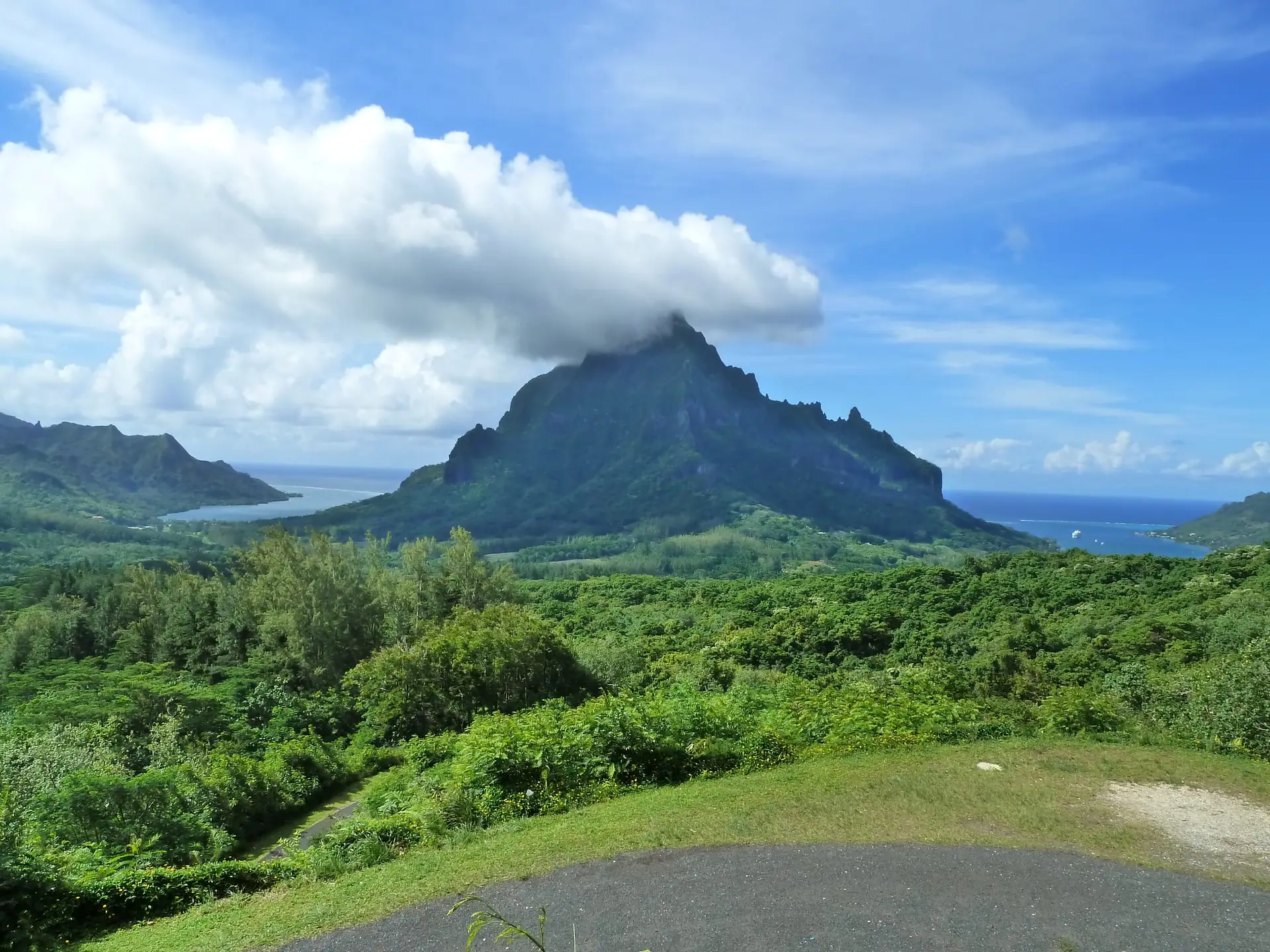
The Opunohu Belvédère, 240 m up in the heart of the island and reachable by car, looks out on Opunohu Bay on one side and Cook’s Bay on the other, with Mount Rotui (899 m) between them. Several signposted trails start there: the Col des Trois Cocotiers trail, 6.6 km and of moderate difficulty, ends at a viewpoint over Rotui and both bays; the climb of Rotui itself is for experienced hikers. The Opunohu valley holds ancient marae, and the Rotui juice factory shows what becomes of the island’s pineapples. Moorea has eight peaks, the highest being Mount Tohiea.
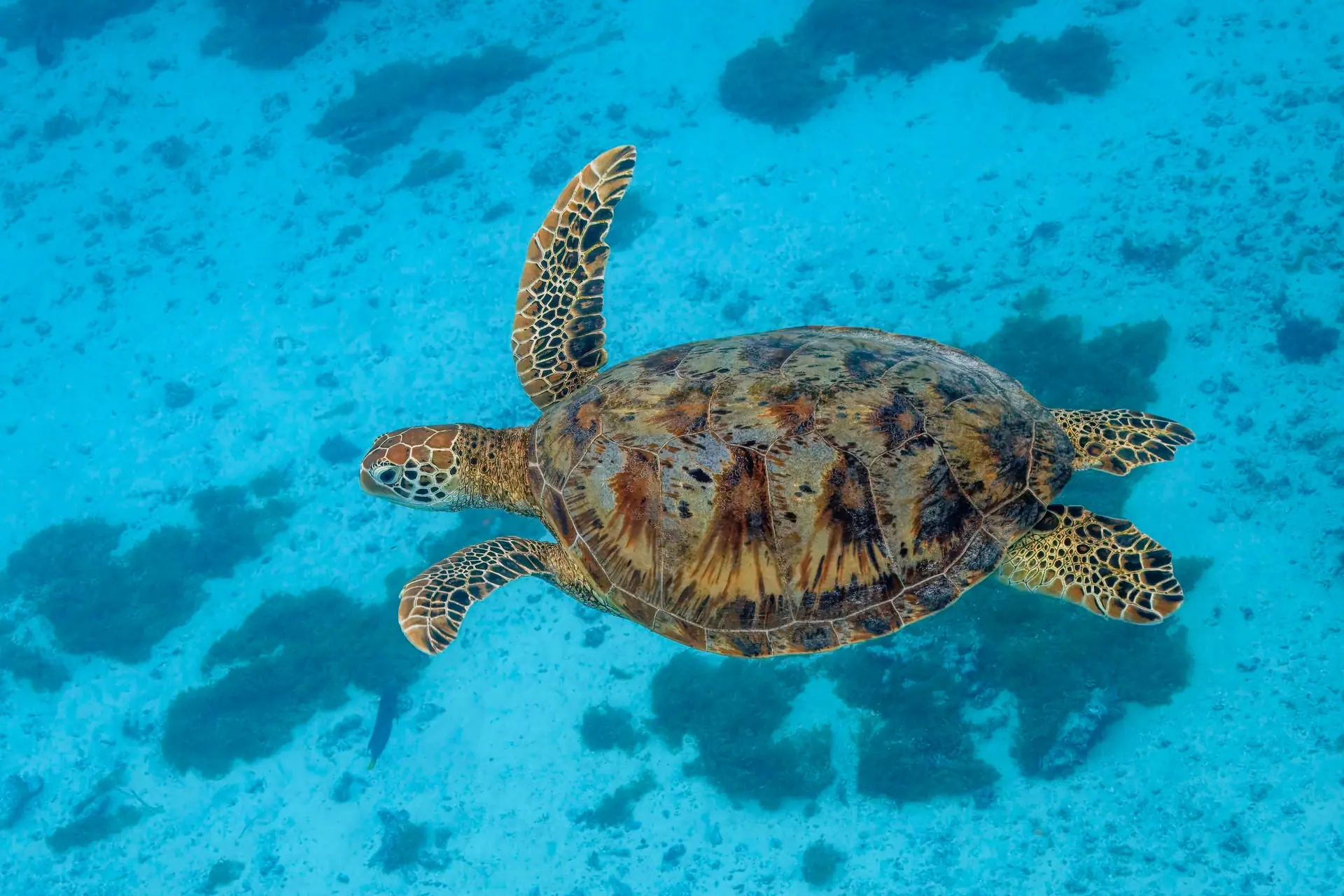
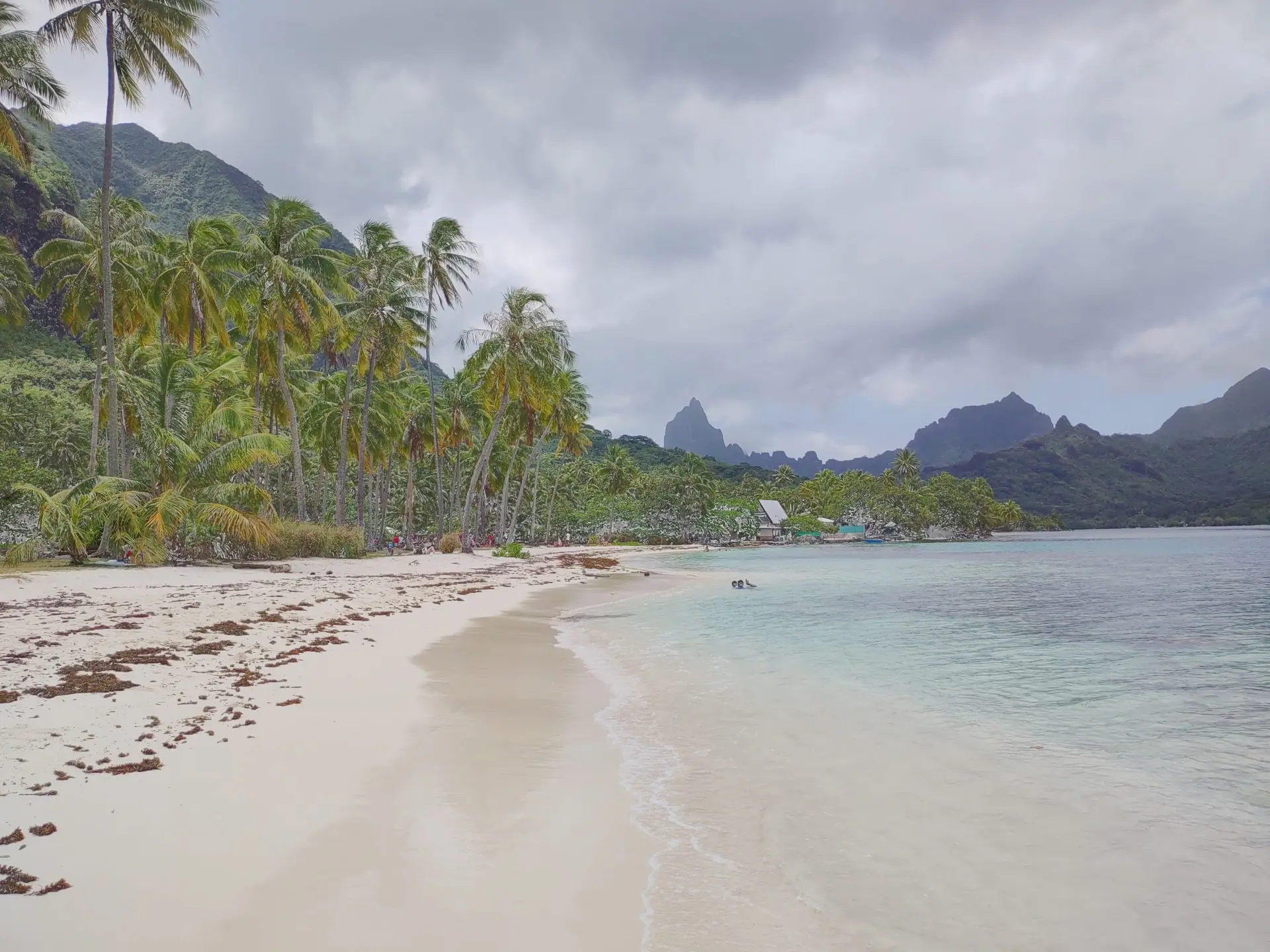
On the water, the classic day outing combines snorkelling stops, rays and blacktip sharks and a picnic on a motu; Tahiti Tourisme advises booking early, as residents and visitors alike are fond of it. The public beach of Temae, near the airport, and that of Ta’ahiamanu, in the north of Opunohu Bay, are the free-access beaches; Haapiti has its surf spot. Divers have the Tiki site, at the north-western point, with its changing currents, and the Opunohu canyon, open to every level, with lemon sharks, rays and turtles.
Where to stay and eat
Tahiti Tourisme describes a wide choice of accommodation, from small family guesthouses to luxury hotels with overwater or garden bungalows, by way of private villas for rent, some with a pool, and stays aboard a sailboat or catamaran. The guesthouses, run by hosts who share their culture, and the small family-run hotels remain the most affordable options; the price depends on comfort and location, lagoon front, motu or village. In every case you wake up in a fare or on a boat, with a view of the lagoon or the greenery.
At the table, from roulottes to fine dining, you eat on the beach, in the hills, on a terrace over the water or on a motu; the lagoon-front hotel restaurants, at Temae or Maharepa, serve the most elaborate cooking, and the roulottes remain the cheapest option. Raw fish in coconut milk (ia ota) is the signature dish, and Moorea’s pineapple, the island’s emblem, goes into many dishes and desserts.
On the island
The commune of Moorea-Maiao was already collecting a tourist tax in 2009 according to the accounts published by the Haut-commissariat, but its current rate could not be checked against an official source: ask your host. The framework is the same for every commune until 31 December 2026: 80 to 200 F per person per night in classified hotels, 20 to 60 F in unclassified establishments, children under 12 exempt. From 1 January 2027, country law no. 2025-38 sets ceilings by category, from 1,500 F in a five-star hotel to 100 F in a family guesthouse, with only children under two exempt; the tax is settled with the host before departure.
Taxi fares on Moorea are, as on Tahiti, set by the Council of Ministers and posted inside the vehicles. The currency of daily transactions is the Pacific franc; Tahiti Tourisme states that Visa and Mastercard are accepted in most hotels and shops in Tahiti and Bora Bora and that cash is often needed on the more remote islands. Tap water is not guaranteed drinkable in every commune: check on tefenua.gov.pf or boil it for at least a minute. The Moorea tourism committee, in Paopao (+689 40 56 20 44), informs visitors about the island’s activities and events.
Sources: Tahiti Tourisme, Moorea · Tahiti Tourisme, mont Rotui · Tahiti Tourisme, venir à Moorea · DPAM, navettes Moorea · ISPF, populations légales 2022 · DPAM, navettes Moorea · Tahiti Tourisme, venir et se déplacer à Moorea · Vaeara’i, ligne Tahiti–Moorea · DPAM, observatoire du transport maritime intérieur 2024 · Aremiti, accueil et billetterie · Aremiti, conditions générales de transport · Tahiti Tourisme, getting to Moorea · Météo-France Polynésie française, climat · Météo-France, note TRACC archipel de la Société (2026) · Haut-commissariat, saison cyclonique · Direction de l’environnement, mammifères marins 2025 · Tahiti Tourisme, baleines · Tahiti Tourisme, plongée à Moorea · Tahiti Tourisme, Belvédère d’Opunohu · Tahiti Tourisme, col des Trois Cocotiers · Tahiti Tourisme, que faire à Moorea · Tahiti Tourisme, les paysages de Moorea · Tahiti Tourisme, le lagon de Moorea · Tahiti Tourisme, les plages de Moorea · Tahiti Tourisme, hébergements à Moorea · Tahiti Tourisme, où manger à Moorea · Haut-commissariat, note sur la taxe de séjour (2011) et comptes administratifs 2009 · Assemblée de la Polynésie française, rapport sur le projet de loi du pays portant diverses mesures fiscales (novembre 2025) · DICP, réforme de la taxe de séjour · Direction des transports terrestres, tarifs des taxis de Tahiti et Moorea · IEOM, pièces et billets en circulation · Tahiti Tourisme, monnaie et change · Centre de santé environnementale, les eaux de consommation · Tahiti Tourisme, Comité du tourisme de Moorea · checked 19 October 2026